
New Jersey country club scene is a magnet for the ultra-wealthy, offering an unparalleled blend of luxury, exclusivity, and world-class amenities. From historic institutions with storied pasts to modern enclaves catering to the elite, these clubs represent the pinnacle of opulence. Below, we dive into the top 25 most exclusive and expensive country clubs in the New Jersey State, each epitomizing the lavish lifestyle sought by the affluent.
25. Suburban Golf Club

Suburban Golf Club, located in Union Township, New Jersey, boasts a significant history tracing back to its founding as the Suburban Club of Elizabeth in 1896. While the club initially featured a nine-hole course designed by Tom Bendelow, its lasting legacy was shaped by the renowned golf course architect A.W. Tillinghast. In 1922, Tillinghast crafted the present 18-hole championship layout, a testament to his artistry at the pinnacle of his design career. The course is famously characterized by its narrow, tree-lined fairways and small, strategically bunkered greens, demanding precision and thoughtful shot-making from golfers.
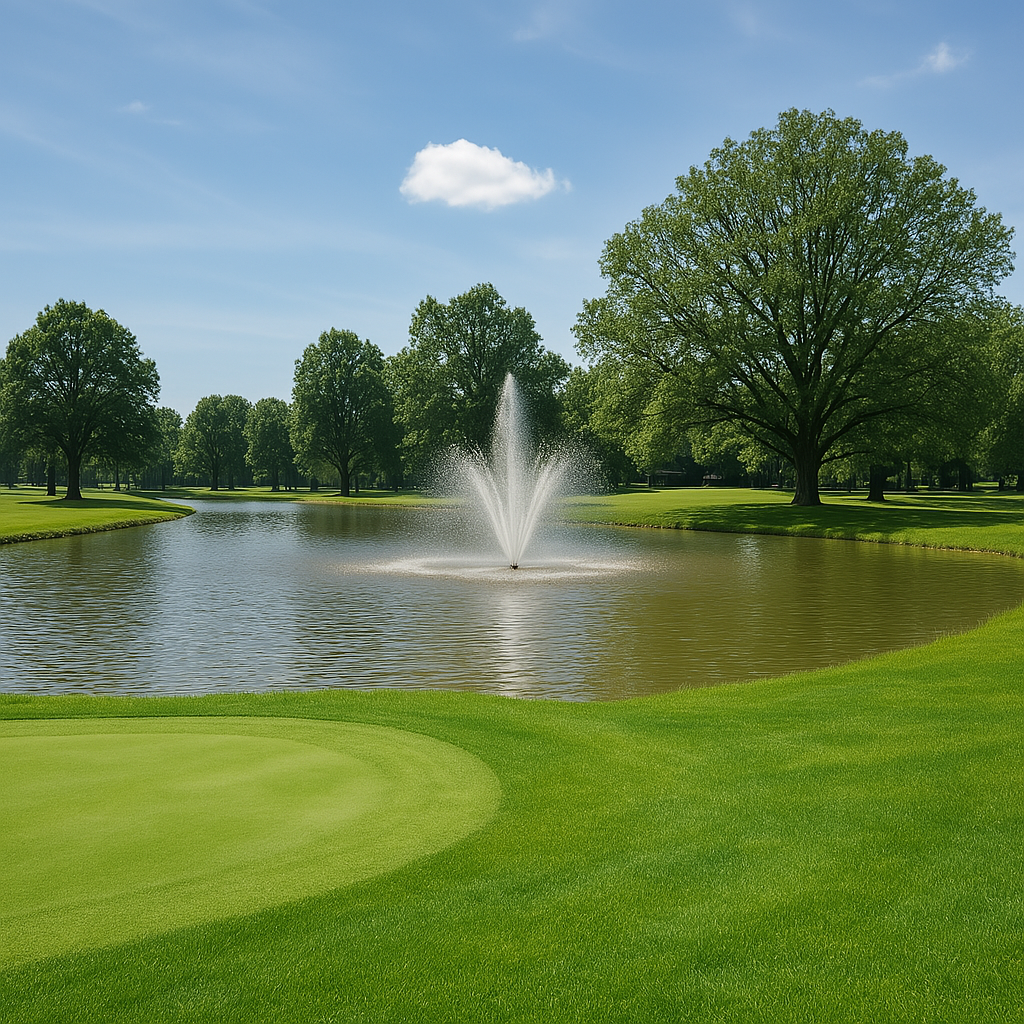
Over the decades, Suburban Golf Club has remained committed to preserving the integrity of Tillinghast’s original vision. In 1999, Ron Prichard undertook an extensive, multi-million dollar restoration, meticulously rebuilding 82 bunkers, redesigning the 14th green to USGA specifications, and reshaping fairways to reflect Tillinghast’s intent. This dedication to architectural purity, combined with its challenging par-71 layout, has made Suburban Golf Club a consistent host for various regional and state tournaments, including multiple New Jersey PGA Championships and U.S. Open qualifiers, further solidifying its reputation as a respected and demanding golf course in the metropolitan area.
24. Beacon Hill Country Club
Beacon Hill Country Club, nestled in Atlantic Highlands, New Jersey, boasts a rich history dating back to 1899, though its origins can be traced to a real estate development in 1892. Initially forming “The Highland Club” in 1899, the club gradually evolved, officially incorporating as Beacon Hill Golf Club in 1919. The club has overcome significant challenges, including a clubhouse destroyed by fire in 1944 and financial struggles during and after World War II. However, dedicated members and local businessmen rallied to preserve the club, reincorporating it in 1946 and laying the groundwork for its continued growth and success.
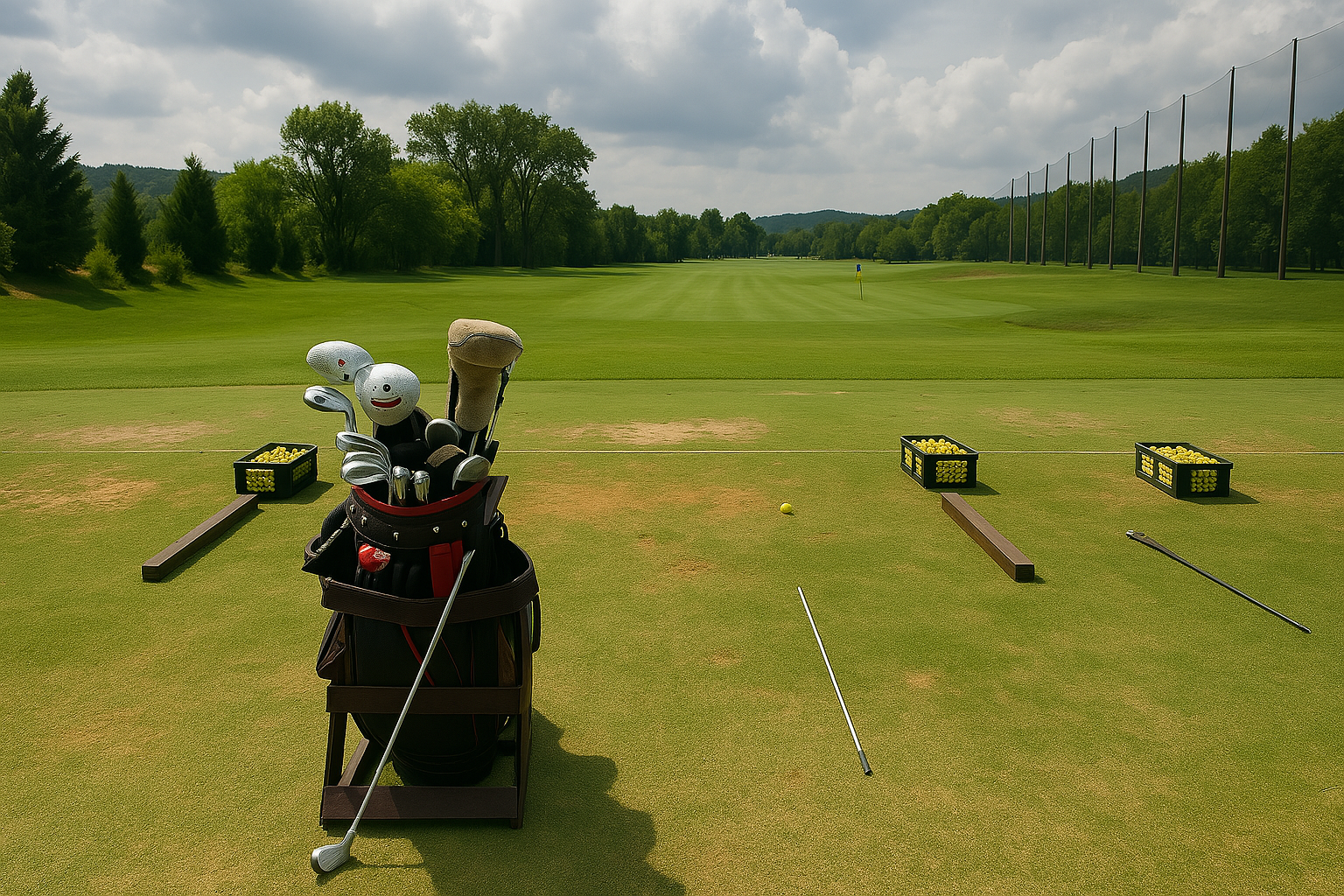
Today, Beacon Hill Country Club is a premier private, member-owned club renowned for its challenging and meticulously groomed 18-hole golf course. While A.H. Findlay is credited with the original 18-hole design, and A.W. Tillinghast consulted on the course, significant modern improvements have been led by architects like Steven Kay and, more recently, Forse Design. These renovations, including a complete rebuilding of the course in 1998-1999 and ongoing master plan work on bunkers, greens, and a new practice facility with Top Tracer technology, ensure a modern yet classic golfing experience. The club also offers breathtaking views of the New York City skyline and Sandy Hook Bay from its elegantly appointed clubhouse, complementing its array of amenities including an Olympic-style swimming pool and superb dining facilities
23. Navesink Country Club
Navesink Country Club, gracefully situated in Middletown, New Jersey, boasts a fascinating history deeply rooted in the area’s late 19th-century real estate development. While the idea of a “Navesink Country Club” emerged around 1898 as a planned entity by the Highlands of Navesink Improvement Company, it officially began its journey in 1900 with a merger into the existing Water Witch Club, a private summer club established in 1895. The club’s modern identity as Navesink Country Club truly began to solidify around 1963 when it acquired a stately mansion, built in 1912 by Samuel Riker, which would become its iconic clubhouse, offering sweeping views of the Navesink River.
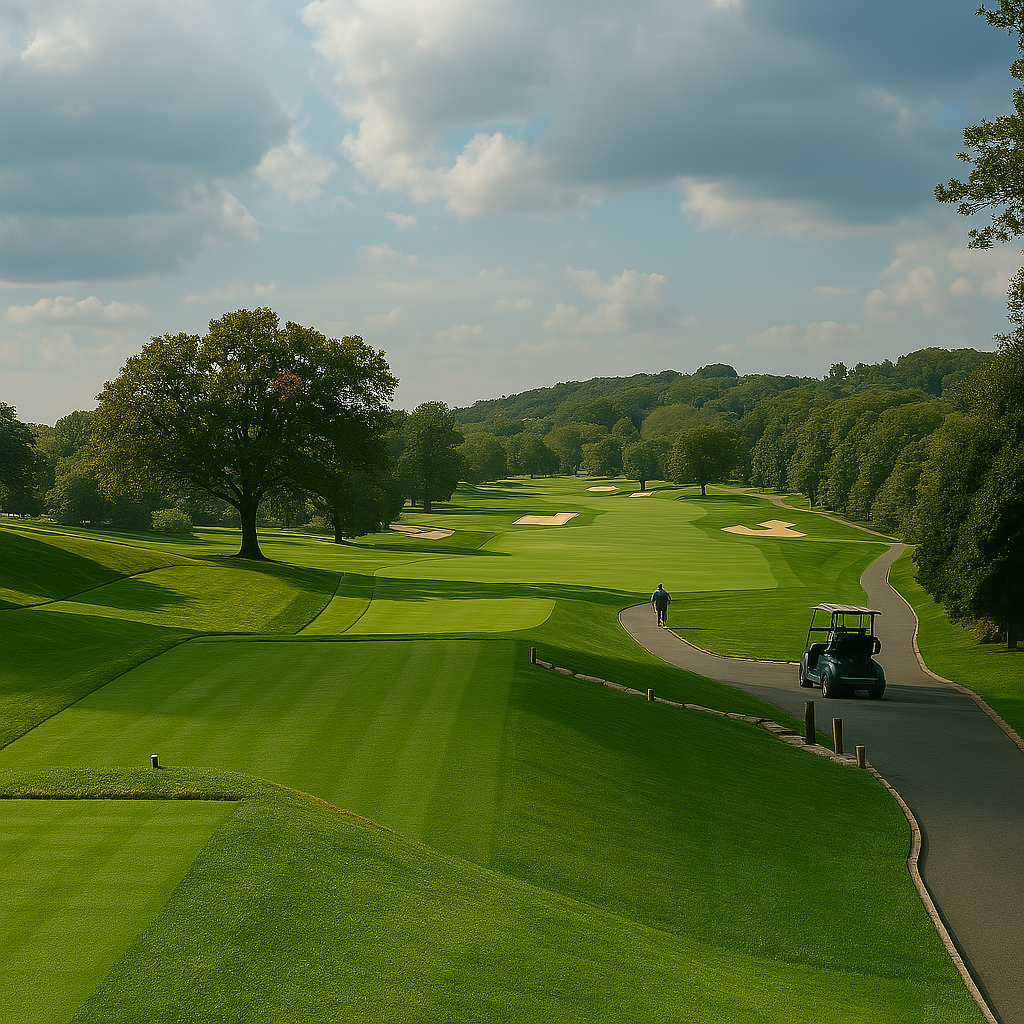
Today, Navesink Country Club is recognized as a premier, four-season, family-oriented private club that offers a remarkable array of amenities. The club features an 18-hole championship golf course, designed by Hal Purdy in 2016, known for its scenic beauty and challenging layout that has previously hosted multiple LPGA events. Beyond golf, members enjoy extensive racquet sports facilities for tennis, platform tennis, and pickleball, alongside a unique private ice rink for hockey and figure skating, providing year-round recreational opportunities. Recent multi-million dollar renovations to the clubhouse and outdoor spaces further enhance the member experience, solidifying Navesink’s commitment to luxury, leisure, and a vibrant community atmosphere.
22. Deal Golf & Country Club

Deal Golf & Country Club, located in Deal, New Jersey, boasts a proud and enduring legacy that stretches back to its founding in 1898. Originally conceived as a nine-hole course by railroad financier and shipping magnate George Washington Young, it quickly expanded to 18 holes, with the help of Lawrence Van Etten. The club’s historic clubhouse, built in 1898, holds the distinction of being the oldest in continuous use in New Jersey, a testament to the club’s deep roots and rich traditions along the Jersey Shore.
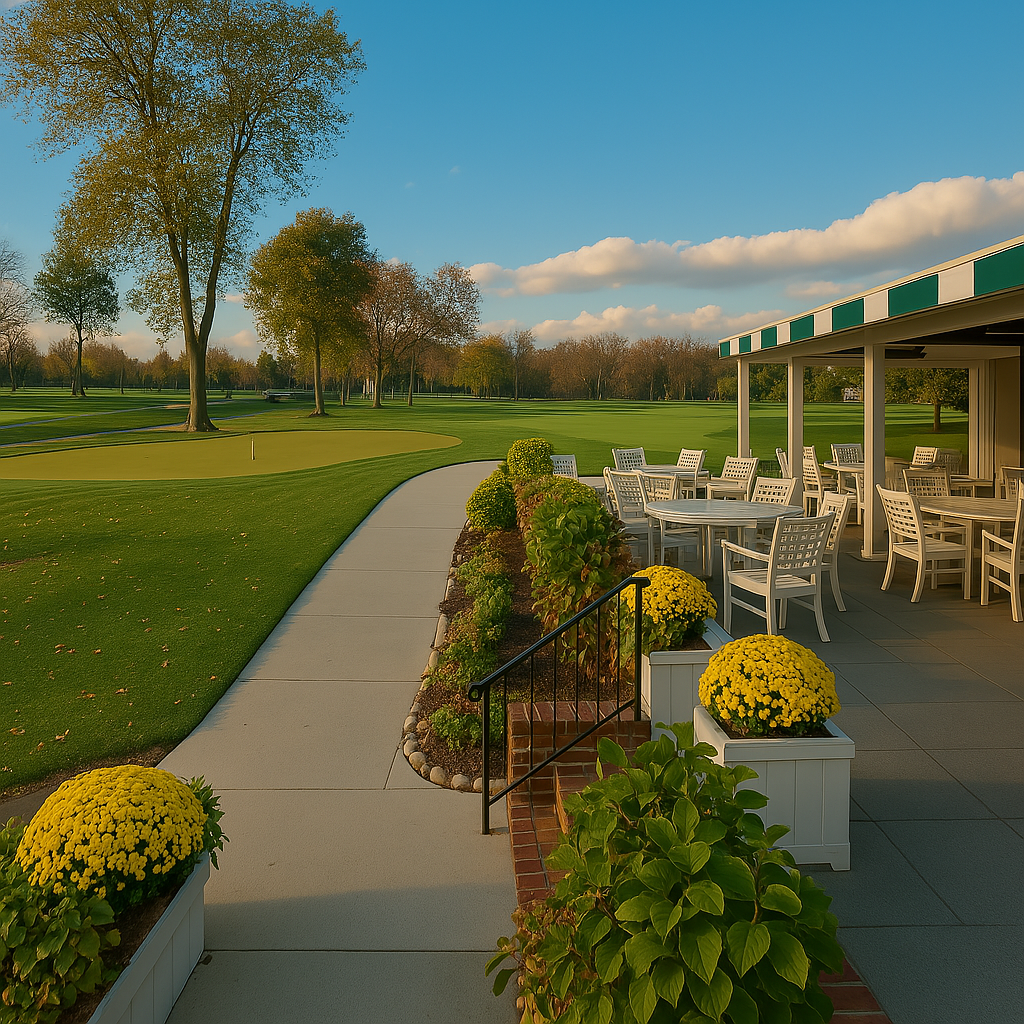
The course at Deal Golf & Country Club is widely recognized for its design by the legendary Donald Ross, who significantly revised and expanded the layout in 1915 after an earlier sale of some property. Ross’s signature style is evident in the course’s tight fairways, strategic bunkering, and famously contoured greens, which come in a variety of configurations, often tightly bunkered in the front. Notable features include the “Valley of Sin” green on the par-three eighth hole, an angled green with a deep swale, and a picturesque dog-leg fourth hole. These design elements, combined with its history of hosting events like the Met Amateur in 1903 and the 1941 PGA Championship (where Deal’s own Vic Ghezzi famously defeated Byron Nelson), ensure that Deal Golf & Country Club remains a celebrated and challenging golf experience.
21. Manasquan River Golf Club

Manasquan River Golf Club, nestled in Brielle, New Jersey, officially began its journey on September 8, 1922, with its first corporate certificate filed in Monmouth County. Founded through the diligent efforts of pioneer Howard N. Folk, the club quickly acquired the Charles Osborn Farm, a sprawling 145-acre property along the picturesque Manasquan River. The club commissioned Robert White, a renowned golf course architect from St. Andrews, Scotland, to design its initial nine holes, which remarkably opened for play by June 30, 1923, followed by the completion of the second nine in 1926.

The 18-hole course at Manasquan River Golf Club is celebrated for its distinctive “dual personalities,” offering a captivating blend of terrain. The first nine holes, laid out by White, play across the flatter land near the river, while the second nine winds through elevated woodlands and laurel-laden ravines, providing compelling, panoramic views of the river. This contrasting topography, combined with strategic bunkering and unique hole designs, has consistently earned the club recognition in top golfing circles as one of New Jersey’s outstanding courses, and it has undergone recent restorations by Andrew Green to further enhance its classic Robert White character.
20. Spring Lake Golf Club
Spring Lake Golf Club, located in the charming coastal town of Spring Lake, New Jersey, boasts a remarkable architectural pedigree and a history spanning over a century. Founded in 1898 as a nine-hole course, its transformation into a renowned 18-hole championship layout involved contributions from two of golf’s most legendary architects: George C. Thomas Jr. (who designed it in 1911) and A.W. Tillinghast (who substantially modified and strengthened it in 1918). Tillinghast’s influence, at the peak of his career, is particularly evident in the course’s strategic bunkering, artfully contoured greens, and the meticulous attention to detail that characterizes his classic designs.
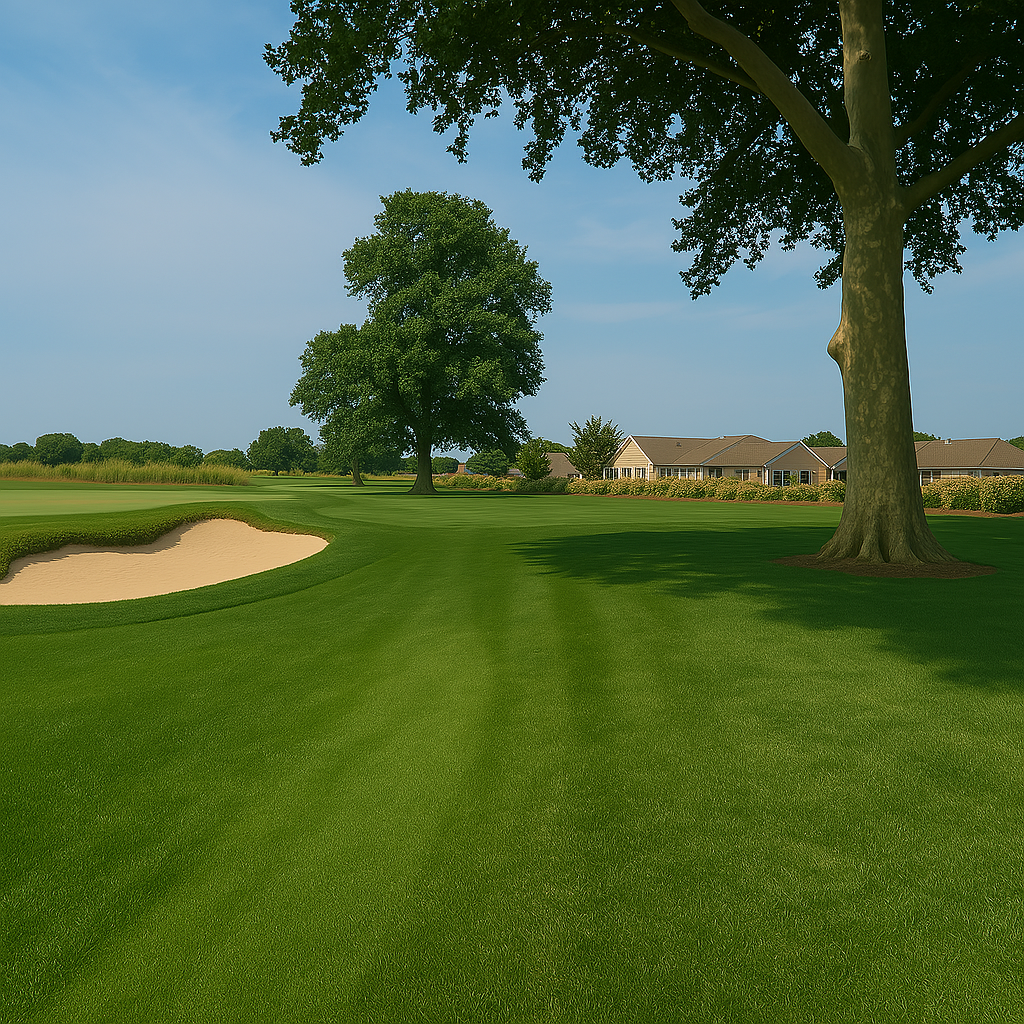
This storied course has consistently attracted top talent and hosted significant tournaments throughout its existence. Notably, Spring Lake Golf Club was the site of the 1981 U.S. Senior Women’s Amateur Championship, showcasing its enduring challenge. Beyond its championship history, the club is also celebrated for its unique character, being one of the few Tillinghast designs close to the ocean, offering a blend of inland play with the occasional influence of sea breezes. Recent renovations, including a master plan by Tripp Davis in 2015, have aimed to restore the strategic intent of both Thomas and Tillinghast, ensuring that Spring Lake Golf Club continues to provide a timeless and captivating golfing experience for its members.
19. Rumson Country Club

Rumson Country Club, established in 1908 in Rumson, New Jersey, boasts a rich history as one of the oldest and most distinguished clubs along the New Jersey shoreline. The club’s 18-hole championship golf course was originally designed by Herbert H. Barker in 1910, an English professional and a disciple of Walter Travis, known for his uniquely shaped fairway bunkers and strategic use of water hazards. This classic design philosophy has been a hallmark of Rumson, providing a challenging yet enjoyable experience that has tested golfers for over a century.
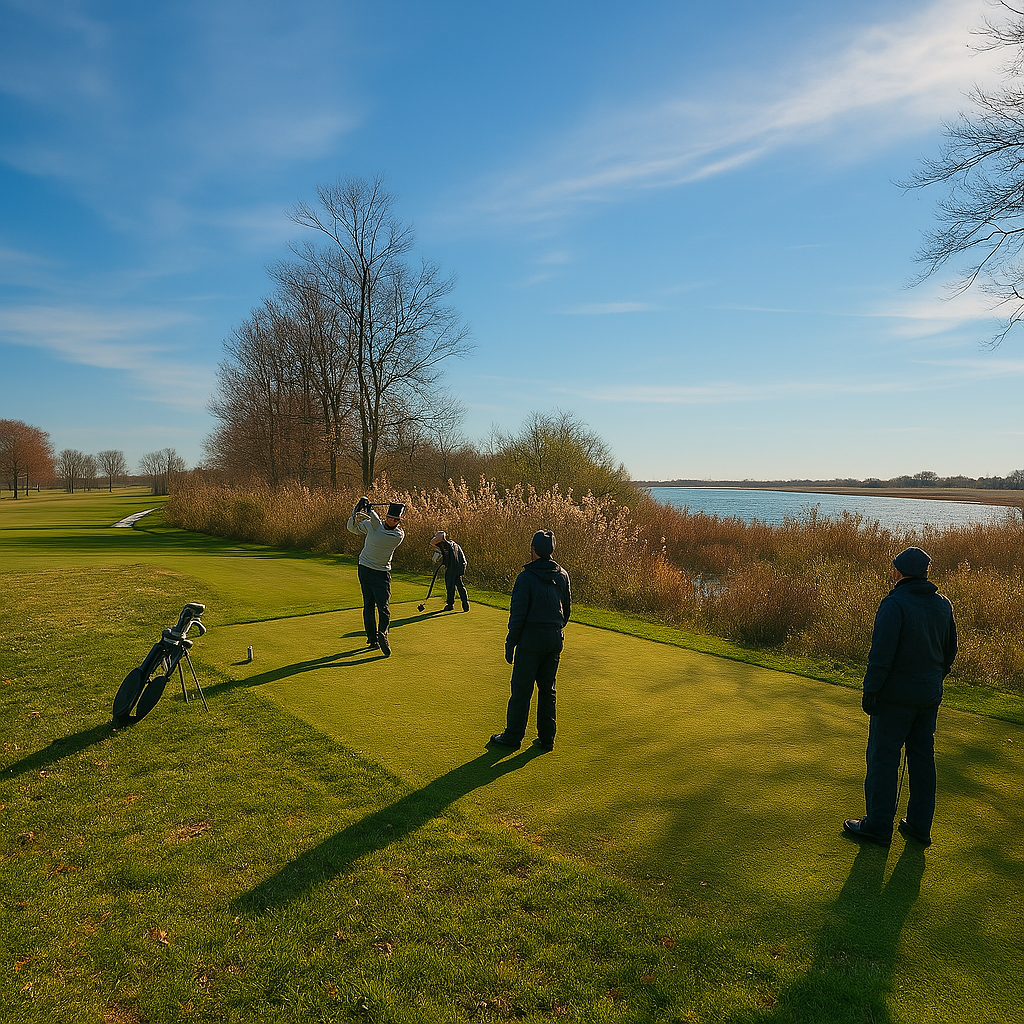
Beyond its compelling golf course, which underwent significant renovations by architect Tripp Davis in 2014 to address Hurricane Sandy damage and restore Barker’s original intent, Rumson Country Club offers a comprehensive array of amenities designed for a family-oriented experience. Members can enjoy croquet, platform tennis, traditional tennis courts, a swimming pool, and even trap and skeet shooting. The club also features a 30+ slip marina and the recently rebuilt Riverhouse, providing exceptional views of the Shrewsbury River and serving as a popular spot for members to relax and socialize.
18. Metedeconk National Golf Club
Metedeconk National Golf Club, a private club situated in Jackson, New Jersey, is a testament to the vision of Richard S. Sambol and his son Herbert H. Sambol, who acquired nearly 1,200 acres over two decades to create a world-class golf destination. Opened in 1986, the club’s initial 18-hole course was meticulously designed by the legendary Robert Trent Jones Sr., with contributions from his chief designer Roger Rulewich. The course is known for its challenging layout, characterized by tree-lined fairways, strategically placed bunkers with distinctive jagged edges, and subtly contoured greens, all seamlessly integrated into the natural landscape of the New Jersey Pinelands.
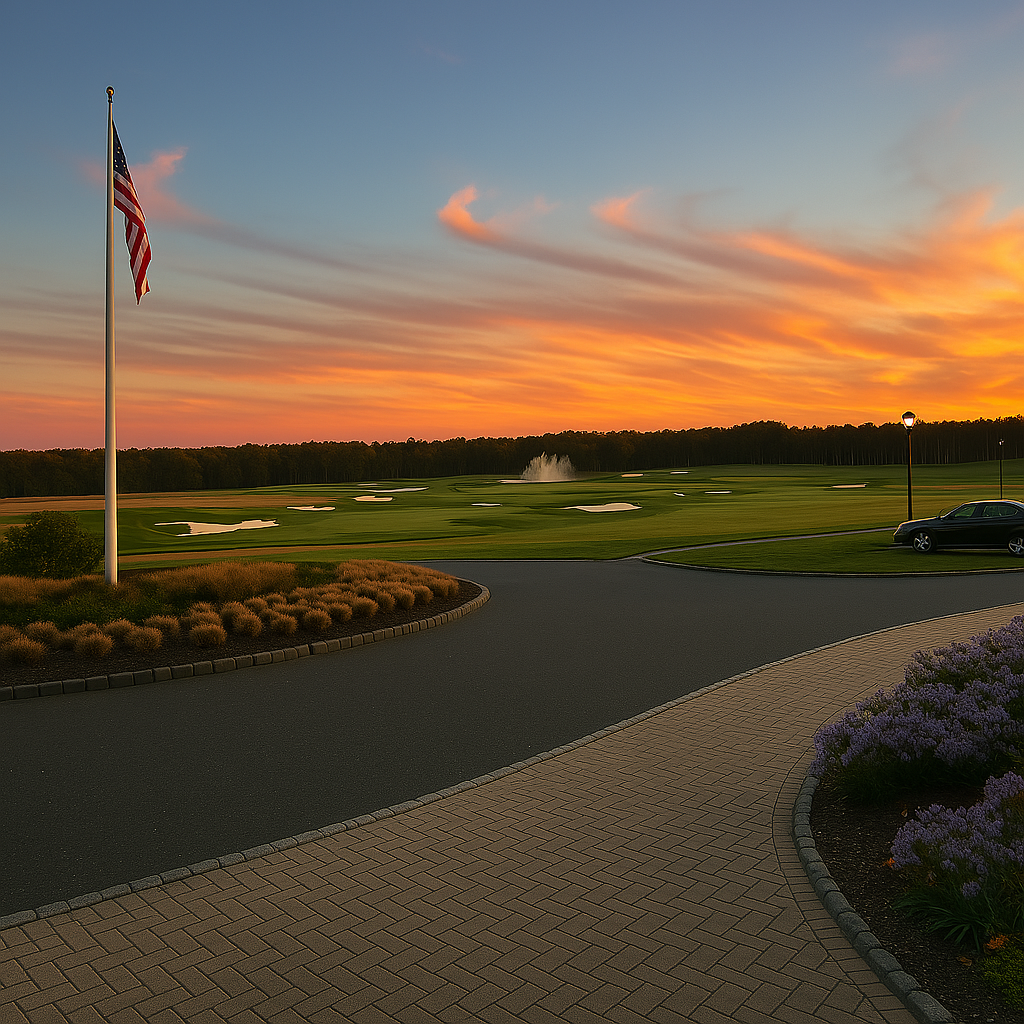
Metedeconk National is unique in offering 27 holes of championship golf, with a third nine added in 1998, ensuring variety and flexibility for its members. The club has consistently garnered accolades, including being named the “third best new private course of 1988” by Golf Digest, and it has served as a prominent venue for numerous prestigious events. These include the Met Open, the NJSGA Open and Amateur championships, and the Governor Hugh L. Carey Challenge Cup Matches. Recent multi-year renovation projects, led by architect Raymond Hearn, have further enhanced the course, restoring original bunker shapes, refining strategy, and ensuring Metedeconk National continues to provide a visually intimidating yet rewarding golfing experience.
17. Mountain Ridge Country Club

Mountain Ridge Country Club, located in West Caldwell, New Jersey, boasts a fascinating and at times tumultuous history, officially forming on April 17, 1912. The club’s journey to its present esteemed status involved several relocations and architectural transformations. While early attempts at a golf course in West Orange proved unsatisfactory, it was the acquisition of a 282-acre parcel in West Caldwell in 1929 that truly set its path. The club then commissioned the legendary Donald Ross to design its current 18-hole championship course, which formally opened in 1931 and has since been lauded as a “hidden gem” within the New Jersey golf landscape.
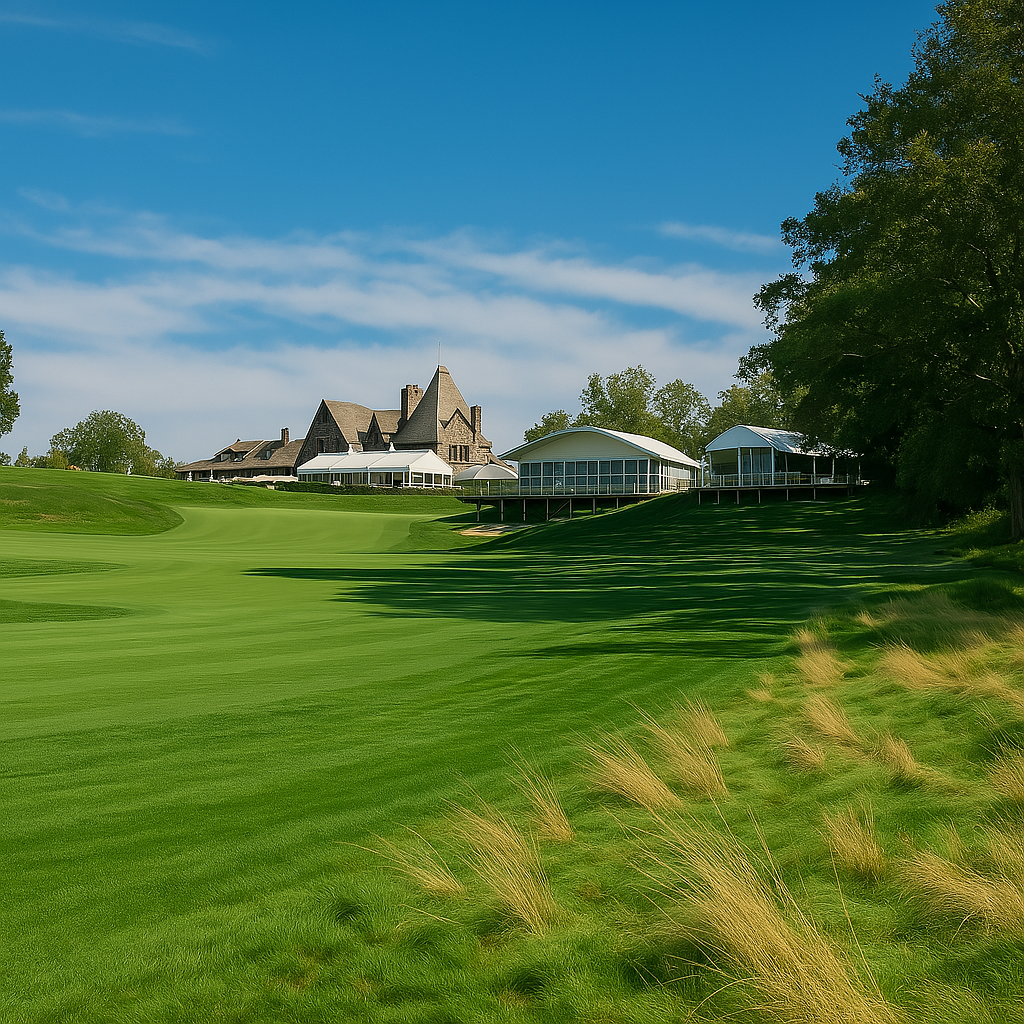
The Donald Ross design at Mountain Ridge is characterized by its intelligent routing across rolling terrain, featuring generously proportioned fairways and subtle yet challenging green complexes that often incorporate distinct ridges and tilts. Ross created two distinct nine-hole loops, both of which dramatically ascend back to the majestic fieldstone clubhouse, designed by renowned architect Clifford C. Wendehack. Over the decades, the club has meticulously preserved Ross’s vision through significant restoration efforts, notably by Ron Prichard and more recently by Andrew Green, ensuring that the course maintains its classic integrity. This commitment to its heritage, combined with its challenging nature, has led Mountain Ridge to host numerous prestigious events, including the 2012 U.S. Senior Amateur and the 2021 LPGA Cognizant Founders Cup, solidifying its reputation as a premier venue.
16. Montclair Golf Club
Montclair Golf Club, located in West Orange, New Jersey, stands as one of the oldest and most historically significant golf clubs in the United States, with roots tracing back to its founding in 1893. What sets Montclair apart is its extraordinary 36-hole layout, uniquely comprised of four distinct nine-hole courses, each beginning and ending at the clubhouse. This extensive and varied offering is a testament to the contributions of two legendary architects: Donald Ross, who designed 27 holes in 1920, and Charles Banks, who added the fourth nine in 1928, creating a diverse golfing experience that has been lauded by many, including Bobby Jones who famously called it “the longest short course I ever played.”
Beyond its impressive architectural pedigree, Montclair Golf Club has a proud championship history, being one of the few clubs in the nation to have hosted both the Men’s and Women’s U.S. Amateur Championships. The club has also seen ongoing commitment to maintaining the integrity of its classic designs through significant renovation projects, most recently by Brian Schneider of Renaissance Golf Design, who has meticulously restored Ross’s fingerprints on the course, widening playing corridors and enhancing strategic elements. This dedication to upholding its heritage, combined with a comprehensive suite of amenities including tennis, paddle courts, and a swimming pool, solidifies Montclair’s reputation as a premier family-oriented club that beautifully blends tradition with modern excellence.
15. Essex County Country Club

Essex County Country Club, located in West Orange, New Jersey, holds the distinguished title of being New Jersey’s oldest country club, established in 1887 as a hunt club. While its earliest golf course was laid out by Alex Findlay in 1895, the club’s current and highly celebrated 18-hole championship course came into being through the hands of legendary Golden Age architects. A.W. Tillinghast designed an “Upper Course” in 1916 that quickly springboarded his career, and later, in the late 1920s, Seth Raynor and his protégé Charles Banks were brought in to expand the club to 36 holes, retaining seven of Tillinghast’s original holes while creating eleven new ones.
The course at Essex County Country Club is renowned for its unique blend of architectural styles, which, despite the contributions of multiple masters, harmoniously create a challenging and engaging experience. The Tillinghast holes offer a subtly different feel from the more overt “template” holes often associated with Raynor and Banks, such as a Biarritz, Road Hole, or Punchbowl. This rich architectural tapestry, coupled with the club’s commitment to continuous improvement—including a recent extensive restoration by Gil Hanse completed in 2024—has ensured that Essex County Country Club remains a highly-regarded layout capable of hosting significant events and attracting a membership that has included prominent figures like Thomas Edison and multiple U.S. Presidents
14. Canoe Brook Country Club

Canoe Brook Country Club, nestled in Summit, New Jersey, boasts a distinguished heritage that dates back to its establishment in 1901. What truly sets this club apart is its unique offering of 36 holes of championship golf, making it one of the few clubs in the region with such extensive facilities. The original 18-hole “North Course” was unveiled in 1901, and its design was significantly overhauled in 1916 by the legendary Walter Travis, a celebrated amateur golfer and architect known for his strategic and often penal designs. This early commitment to quality golf laid the foundation for Canoe Brook’s future prominence.
The club’s expansion continued with the addition of the “South Course” in 1924, designed by C.H. Alison, a prominent member of the esteemed Colt, Alison & MacKenzie firm. Both the North and South courses have undergone various significant alterations and renovations over the decades, adapting to challenges like highway construction and evolving architectural philosophies, with notable work by Rees Jones in more recent times. Canoe Brook has consistently hosted prestigious events, including the 1936 U.S. Women’s Amateur and numerous sectional qualifiers for the U.S. Open, solidifying its reputation as a premier venue for both championship golf and a comprehensive family-oriented country club experience.
13. Union League Liberty Hill

Union League Liberty Hill, located in Lafayette Hill, Pennsylvania, represents a significant expansion of the historic Union League of Philadelphia’s distinguished portfolio of properties. This expansive facility, formerly known as The Ace Club, was acquired by the Union League in 2021, transforming it into a premier destination for golf, hospitality, and events. The centerpiece of Liberty Hill is its challenging 18-hole championship golf course, meticulously designed by golf legend Gary Player, which opened in 2003. Player’s design philosophy is evident in the course’s strategic layout, featuring dramatic elevation changes, flowing fairways, and visually appealing water features integrated across the 311-acre property.
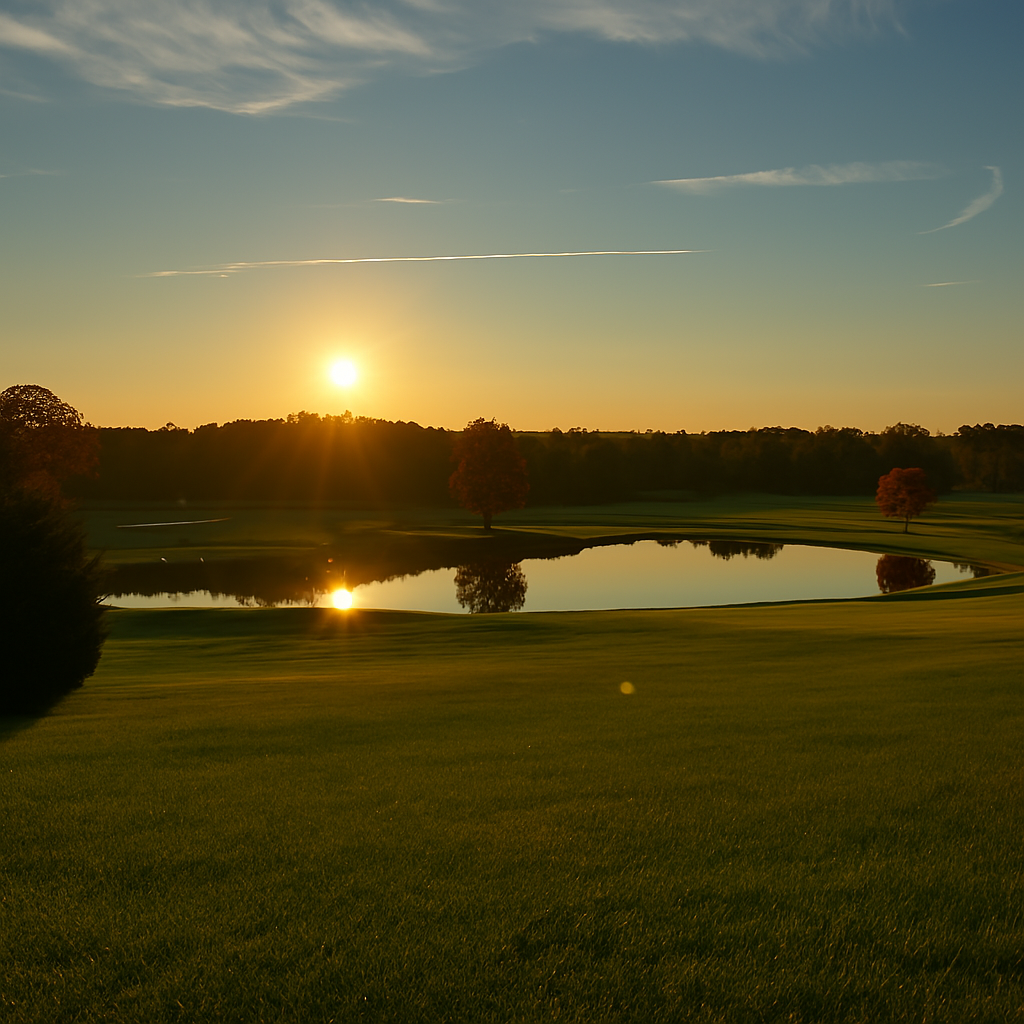
Beyond the championship golf course, which has hosted professional events like the Exelon Invitational, Union League Liberty Hill offers a comprehensive suite of modern amenities. The property includes a luxurious lodge with 120 hotel rooms, making it a full-service retreat for members and guests. It also boasts over 50,000 square feet of state-of-the-art meeting and event space, complemented by multiple dining venues like the Liberty Hill Grille. With a commitment to providing a top-tier experience, Union League Liberty Hill combines its renowned golf course with extensive hospitality and event capabilities, solidifying its role as a key component of the Union League’s mission to offer exceptional member experiences.
12. Union League National Golf Club
Union League National Golf Club, located in Swainton, New Jersey, is a testament to an ambitious and transformative vision, being one of the Union League of Philadelphia’s premier golf properties. Originally known as Sand Barrens Golf Club, the property was acquired by the Union League in 2018 and has since undergone a dramatic, multi-year “re-imagining” led by renowned architects Dana Fry and Jason Straka. This extensive project, completed in 2022, was far more than a renovation; it involved moving over 1.6 million cubic yards of earth to create a visually stunning and strategically complex 27-hole championship course, designed to evoke the rugged beauty of Pine Valley and the undulating fairways of Augusta National.
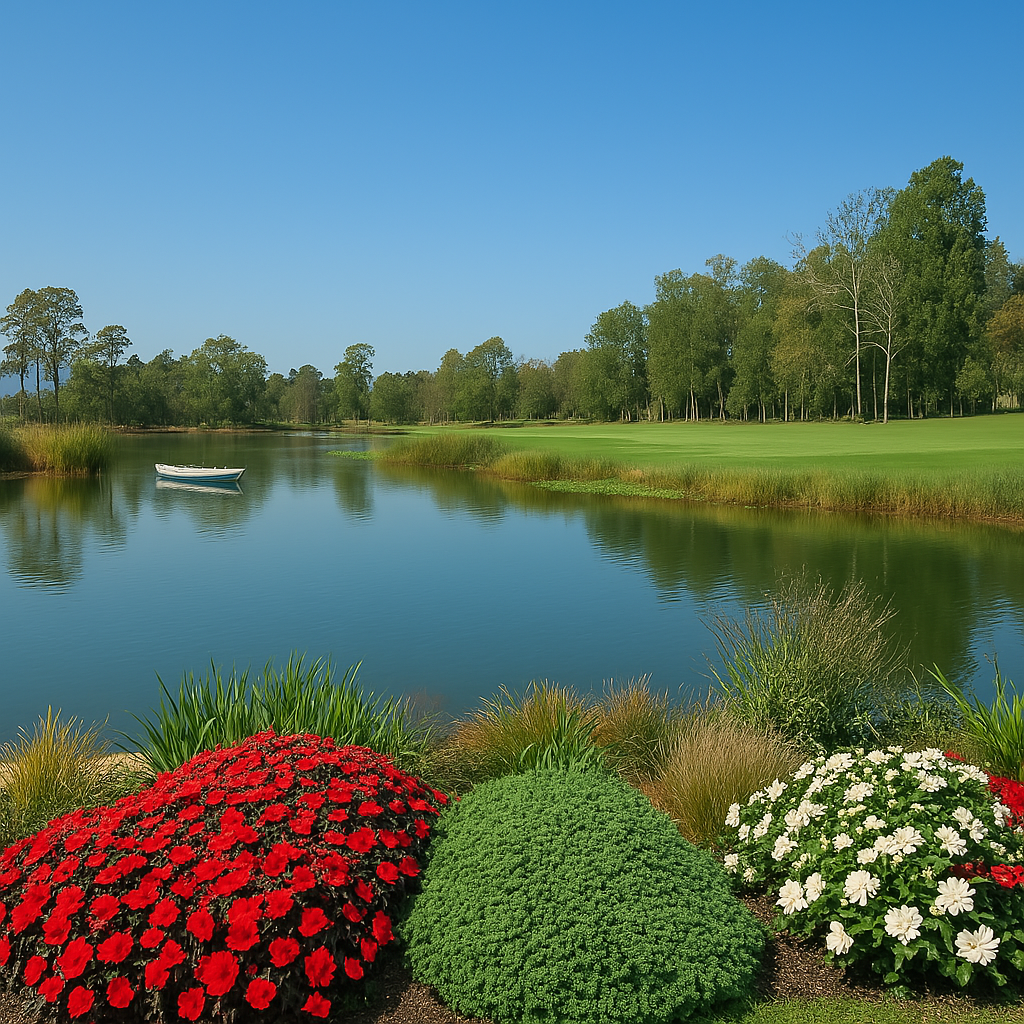
The centerpiece of Union League National’s transformation is “The Big Fill,” a massive man-made hill that rises nearly 80 feet above sea level at its highest point, creating dramatic elevation changes and panoramic views across the property. The 27 holes are divided into three distinct nines – Grant, Meade, and Sherman – each offering a unique blend of challenge and enjoyment with vast waste areas, numerous water hazards, and large, multi-tiered greens that demand precise approach shots. This bold architectural undertaking has solidified Union League National’s reputation as a top-tier private golf experience at the Jersey Shore, complementing the Union League’s mission to provide exceptional amenities for its discerning membership.
11. Hamilton Farm Golf Club
Hamilton Farm Golf Club in Gladstone, New Jersey, is a truly distinctive and luxurious golf destination with a rich history deeply rooted in a grand English country estate. The property’s origins date back to 1911 when financier James Cox Brady envisioned creating a vast agricultural showplace and private retreat. Over the decades, the estate evolved, with a magnificent stable built in 1916 that now serves as the headquarters for the United States Equestrian Team. It wasn’t until the late 1990s that the vision for an exclusive golf club took shape, culminating in the construction of two world-class courses designed by Dr. Michael Hurdzan and Dana Fry, opening in 2001.
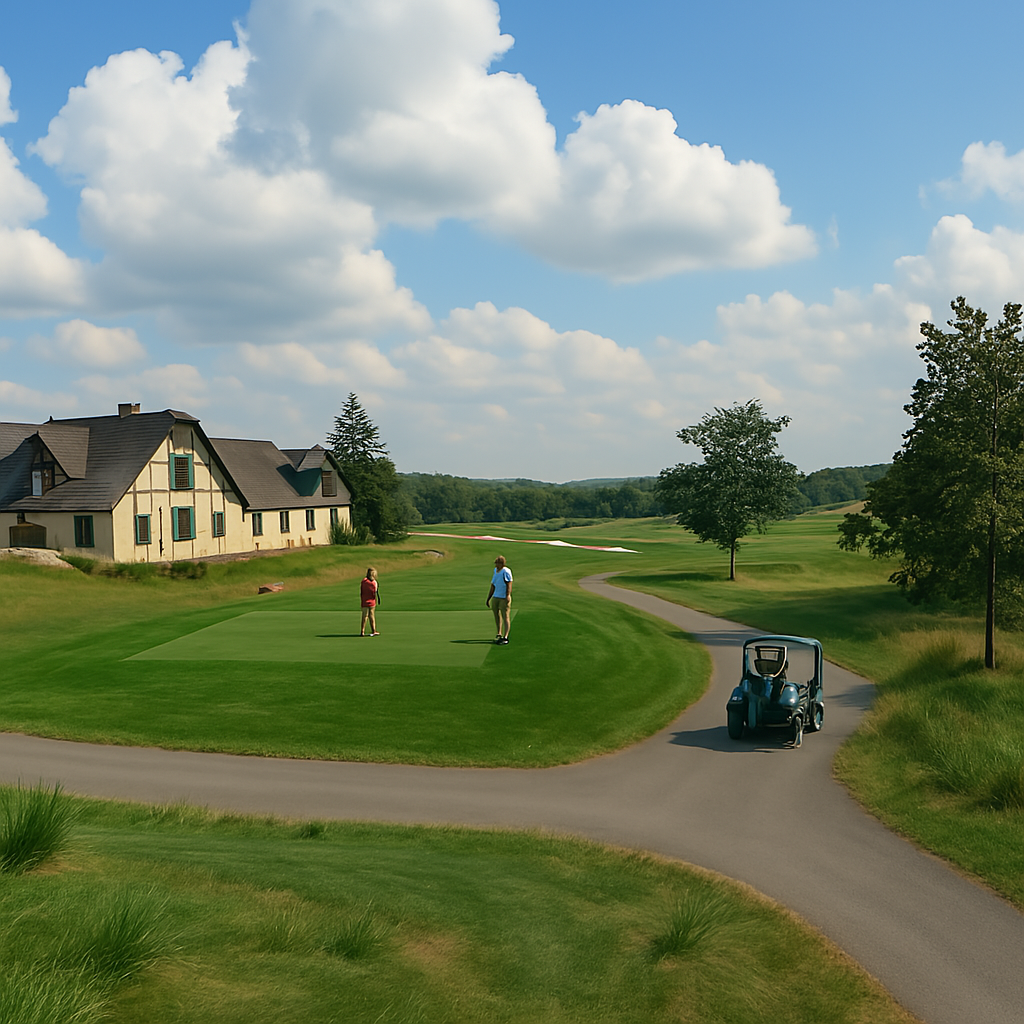
Hamilton Farm is unique in offering not only an 18-hole championship course, the Highlands, but also an equally impressive 18-hole par-3 course, the Hickory, which holds the distinction of being the only USGA-rated par-3 course in the country. The Highlands course is celebrated for its challenging layout, featuring dramatic elevation changes, sculpted bunkers, and strategic play, while the Hickory course provides a demanding yet enjoyable test of short game skills. Beyond the golf, the club maintains the restored Georgian mansion with elegant dining and overnight suites, and offers a comprehensive array of amenities, including a helipad and concierge services, all contributing to its reputation as one of America’s premier and most exclusive golf club experiences.
10. Plainfield Country Club
Plainfield Country Club, located in Edison, New Jersey, boasts a long and storied history, tracing its origins back to 1890 as the Hillside Tennis Club before formally embracing golf. The club’s iconic 18-hole championship course, which opened for play in 1921, was masterfully designed by the legendary Donald Ross, a testament to his genius in routing and green complex artistry. Ross himself noted the “gently flowing hills, where golf holes can roll across the landscape,” a characteristic that defines the course’s natural beauty and strategic demands, often cited as one of his finest works.
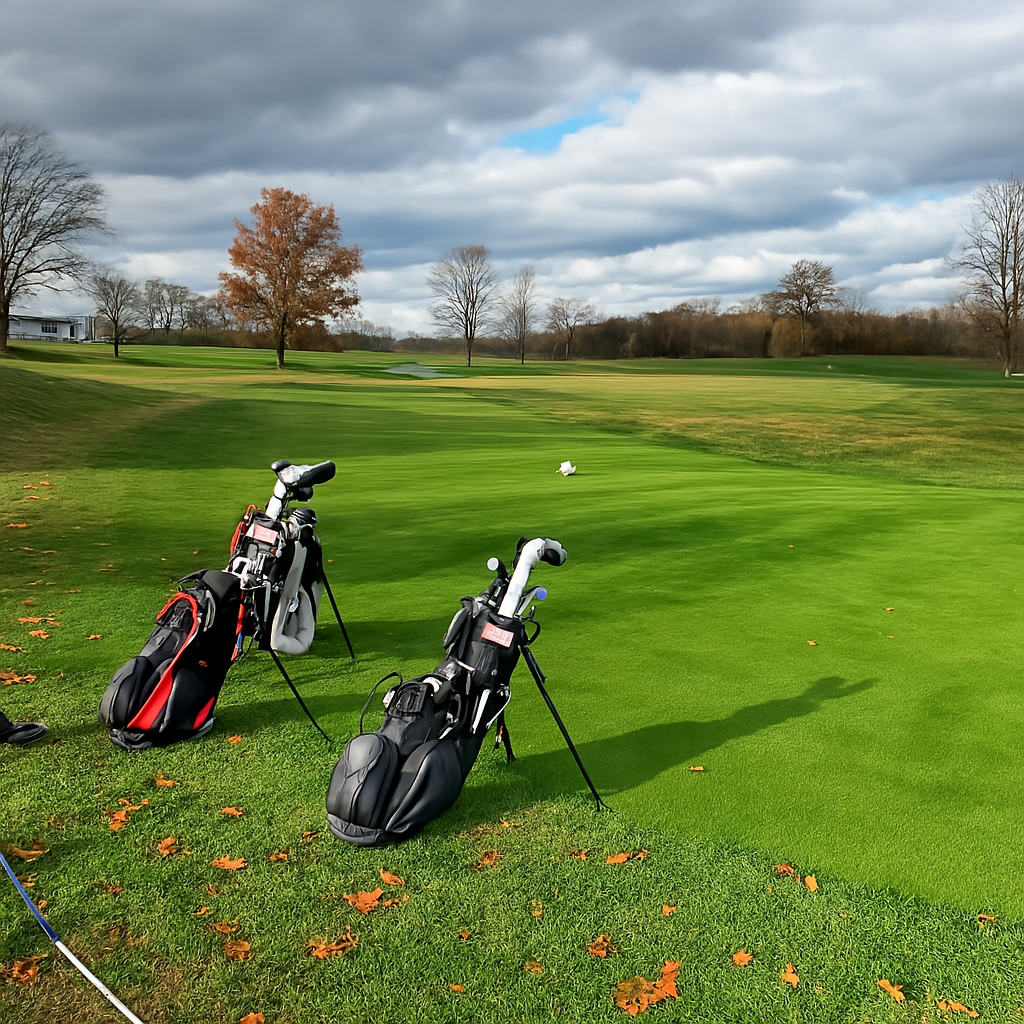
Over the decades, Plainfield Country Club has distinguished itself as a premier venue for both amateur and professional championships. It famously hosted the 1978 U.S. Amateur, won by John Cook, and the 1987 U.S. Women’s Open, where Laura Davies emerged victorious in a thrilling three-person playoff. More recently, the course has welcomed the PGA Tour’s Barclays tournament twice, in 2011 and 2015, showcasing its challenge to the world’s best players. Extensive restoration efforts by Gil Hanse since 1999 have meticulously brought back Ross’s original vision, including the recovery of lost views, expansion of greens to their original size, and thorough bunker work, ensuring Plainfield remains a timeless and formidable test of golf.
9. Ridgewood Country Club
Ridgewood Country Club, located in Paramus, New Jersey, boasts a rich and storied history that dates back to its founding in 1890 in neighboring Ho-Ho-Kus. However, the club found its permanent home and established its iconic identity when it moved to its current Paramus location in 1926. The 27-hole golf course, which opened in 1929, is a celebrated masterpiece designed by the legendary A.W. Tillinghast, a titan of Golden Age golf course architecture. Tillinghast’s design is known for its intricate routing, challenging bunkering, and a harmonious blend of length and strategy across its three distinct nines: West, Center, and East.
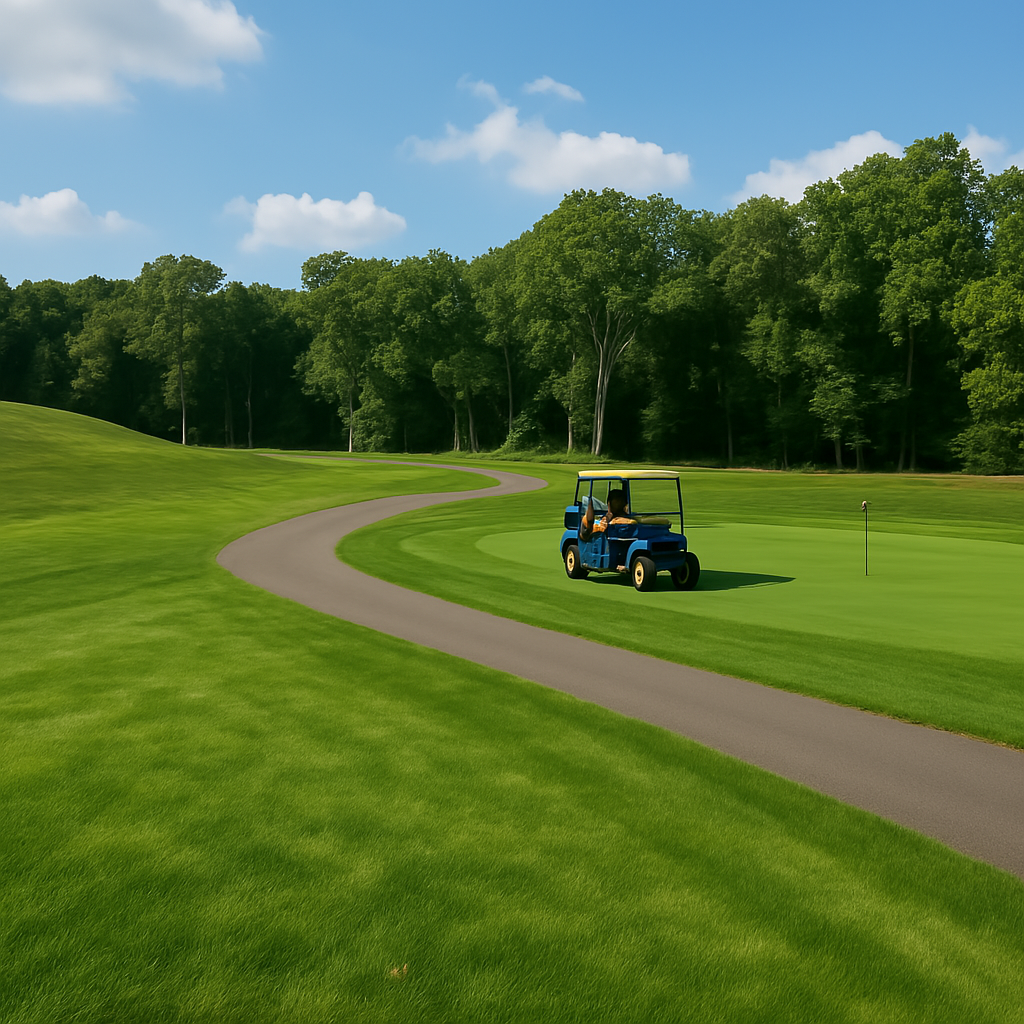
Ridgewood’s commitment to preserving Tillinghast’s original vision has been a hallmark of the club, with extensive restoration efforts led by Gil Hanse since 2000, meticulously rebuilding bunkers and restoring Tillinghast’s unique design elements. This dedication has ensured that Ridgewood remains a premier venue, consistently hosting major championships throughout its history. Notably, it was the site of the 1935 Ryder Cup, where the U.S. team, led by Walter Hagen, clinched a victory. The club has also welcomed numerous U.S. Amateurs (including 1974 and 2022), U.S. Senior Opens, Senior PGA Championships, and multiple PGA Tour FedEx Cup playoff events, including The Barclays (now The Northern Trust), solidifying its reputation as a true test for the world’s best golfers.
8. Trump National Golf Club

Trump National Golf Club in Bedminster, New Jersey, is a sprawling and luxurious private golf club that opened its doors in 2004, following Donald Trump’s acquisition of the property in 2002. The club boasts an impressive 36 holes of championship golf, meticulously designed by the renowned architect Tom Fazio. The “Old Course,” which opened first, quickly gained recognition, frequently ranking among the top 100 courses globally. A second 18-hole “New Course” was later added by Tom Fazio II in 2008, further enhancing the club’s extensive golfing offerings across its more than 600 acres of prestigious Somerset County countryside.
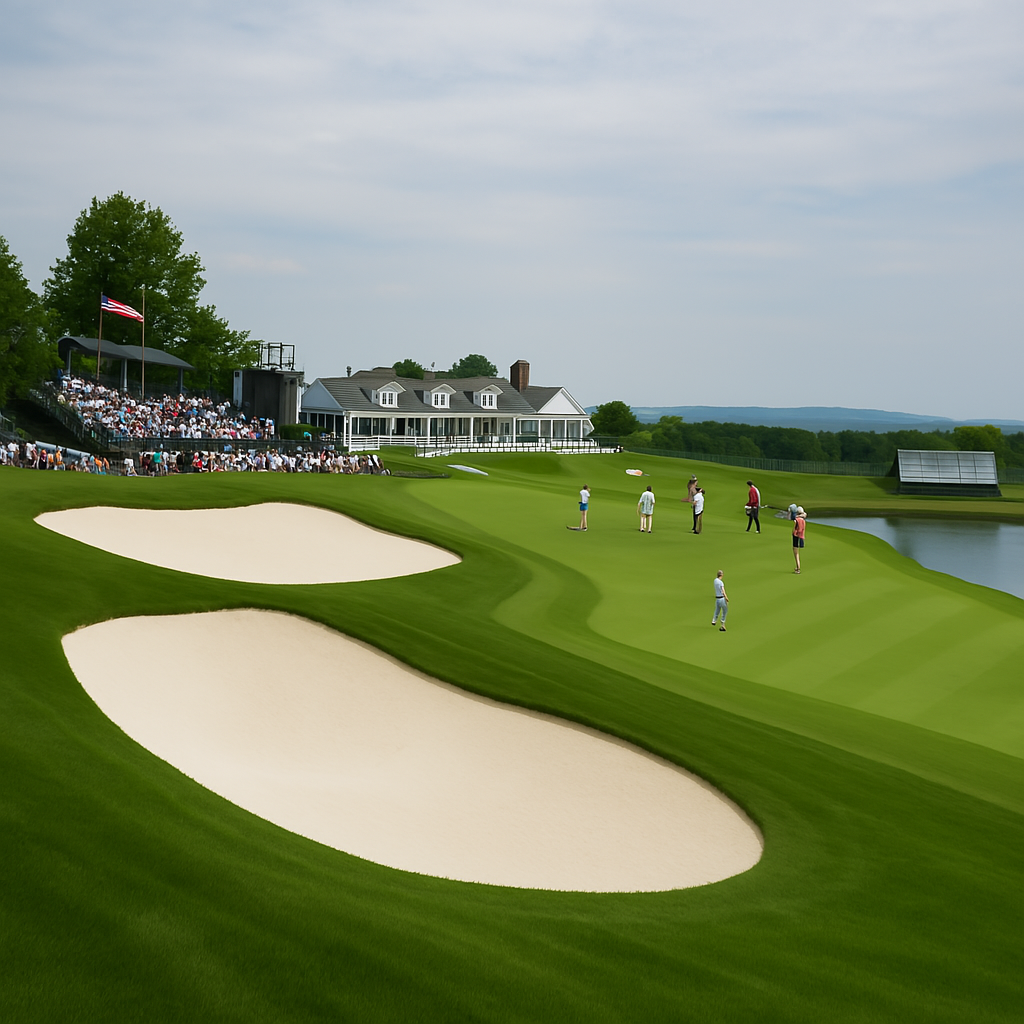
Beyond its world-class golf courses, Trump National Bedminster is known for its opulent amenities and its role as a notable event venue. The club features a majestic 1932 Georgian Revival manor house that serves as its clubhouse, complete with an exquisite ballroom and sophisticated dining options. It has played host to significant golf tournaments, including the 2017 U.S. Women’s Open, which saw Sung Hyun Park claim the title, and multiple LIV Golf events. The property also offers a luxurious swimming pool complex, tennis center, state-of-the-art indoor golf learning center, and even equestrian facilities, all designed to provide a comprehensive and exclusive experience for its discerning members.
7. Hidden Creek Golf Club

Hidden Creek Golf Club, located in Egg Harbor Township, New Jersey, is a testament to the minimalist design philosophy of renowned architects Bill Coore and Ben Crenshaw. Opened in 2002, this private club was meticulously crafted from a sandy, pine-covered scrubland, with the designers spending weeks immersing themselves in the property to ensure the course seamlessly blended with the natural contours of the land. The result is a course celebrated for its subtle yet complex challenges, emphasizing strategy, ground game, and course knowledge over brute force, reminiscent of classic heathland courses in the British Isles.
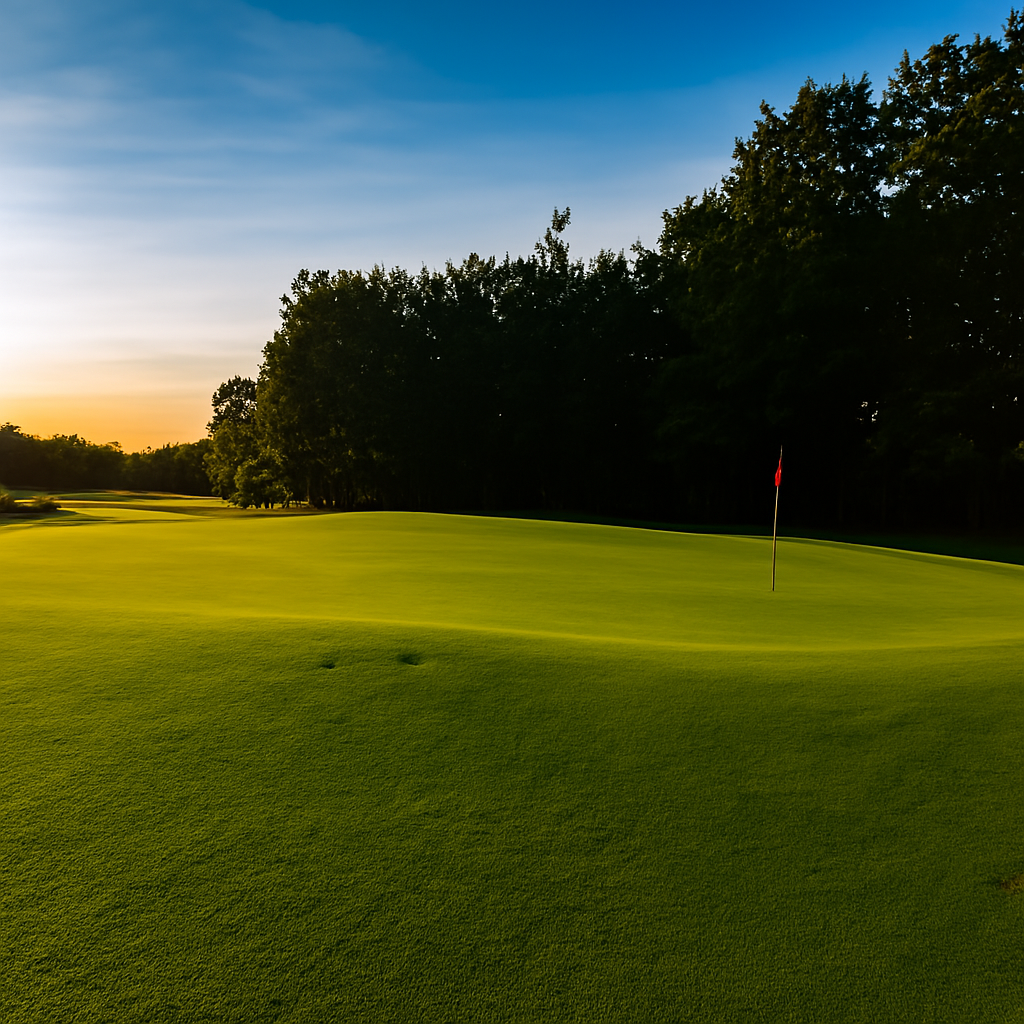
Hidden Creek’s commitment to a purist golf experience is evident in its absence of homes or paved cart paths within the playing corridors, encouraging walking and a more traditional feel. The course features wide, receptive fairways that invite strategic play, large, interesting greens with subtle undulations, and visually appealing bunkering that perfectly complements the natural aesthetic. Consistently ranked among the top courses in New Jersey and the nation, Hidden Creek also offers luxurious accommodations in mansion-style houses, making it a sought-after destination for golf enthusiasts seeking a world-class, unadulterated golf experience.
6. Bayonne Golf Club

Bayonne Golf Club, situated on the edge of New York Harbor in Bayonne, New Jersey, is a truly remarkable and audacious feat of golf course engineering. Opened in 2006, this private club was built entirely from scratch on a former landfill that received millions of cubic yards of dredged material from the Hudson River. Developer and designer Eric Bergstol envisioned creating a links-style course reminiscent of those found in Scotland and Ireland, and through years of meticulous earth-moving and shaping, he transformed a flat, industrial site into a landscape of dramatic, man-made dunes reaching up to 90 feet high, offering unparalleled panoramic views of the Manhattan skyline, the Statue of Liberty, and the harbor.
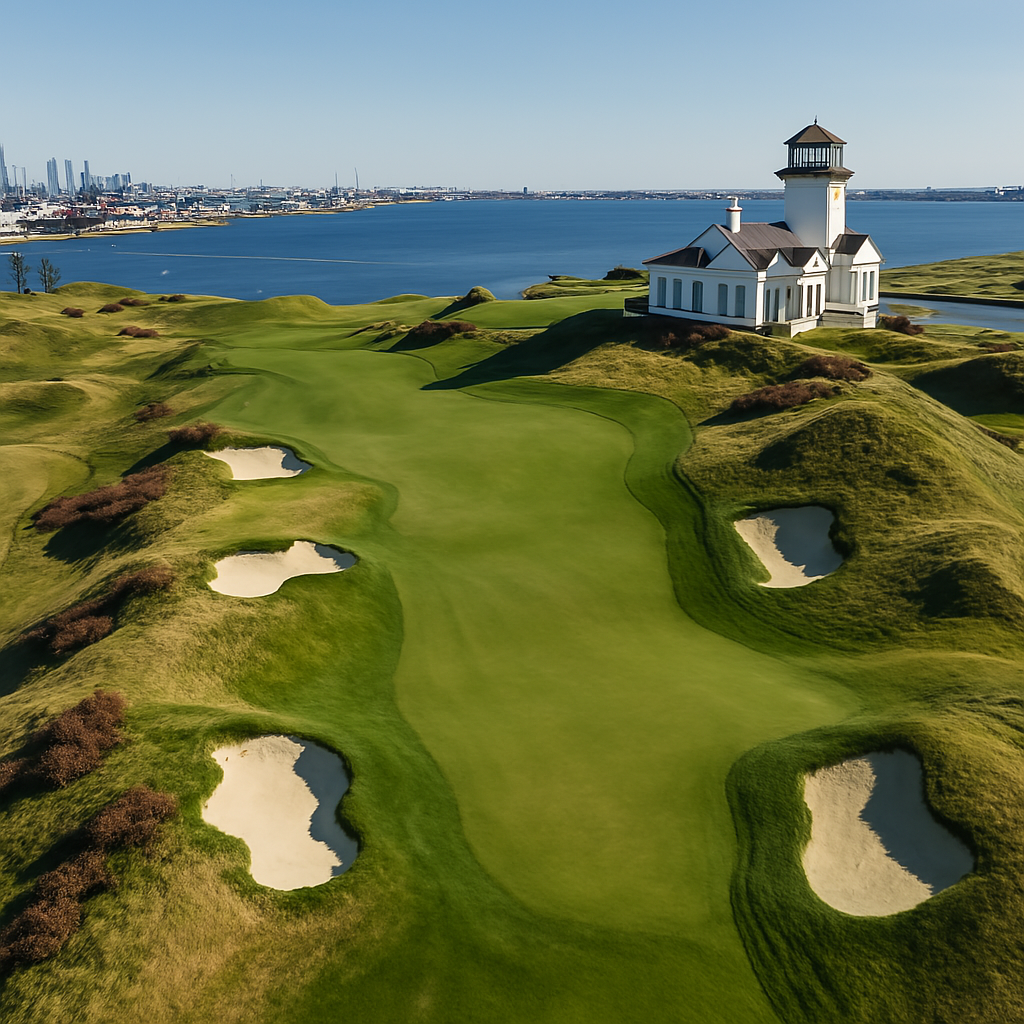
The 18-hole championship course at Bayonne is known for its challenging yet strategic play, with a design that emphasizes ground game, natural contours, and the ever-present influence of the wind. Each hole is carefully crafted to feel distinct and separate, often incorporating dramatic elevation changes and challenging bunkering. Beyond the golf, the club’s iconic castle-style clubhouse, complete with a lighthouse, sits atop the highest point of the property, providing breathtaking vistas and serving as a majestic focal point. Bayonne Golf Club also offers unique amenities like a private ferry service from Manhattan and a practice range that extends into the harbor, further solidifying its reputation as one of the most distinctive and exclusive golfing experiences in the world.
5. Hollywood Golf Club

Hollywood Golf Club, nestled in Deal, New Jersey, boasts a rich and complex history that began with its founding in 1898. The club’s current 18-hole championship course, which opened in 1913, is a testament to the vision of legendary golf architect Walter J. Travis. Travis, a celebrated amateur champion and influential golf writer, took a pre-existing layout by Isaac Mackie and, in a significant 1915 redesign, transformed it into a strategic masterpiece. His work at Hollywood is particularly notable for its unique and extensive bunkering – a departure from his usual style – with one hole famously nicknamed the “Heinz 57 hole” for its dizzying array of sand traps.
Over the decades, Hollywood Golf Club has meticulously preserved the integrity of Travis’s design through a series of thoughtful restorations, most notably by Tom Doak’s Renaissance Golf Design firm in 2014. These efforts have focused on bringing back the original bunker shapes, expanding greens to their intended contours, and enhancing the strategic options for play. This commitment to its architectural heritage, combined with its challenging layout, has allowed Hollywood to host numerous prestigious events, including the 1921 U.S. Women’s Amateur and the 2014 U.S. Senior Women’s Amateur, solidifying its reputation as a classic and demanding test of golf.
4. Somerset Hills Country Club

Somerset Hills Country Club, nestled in Bernardsville, New Jersey, stands as a timeless masterpiece of golf course architecture, with its origins tracing back to a social and recreational club formed in 1899. The club’s iconic 18-hole championship course, consistently ranked among the top 100 in the country, was meticulously designed by the legendary A.W. Tillinghast in 1918. Tillinghast’s work at Somerset Hills is a fascinating study of his evolving style, showcasing a blend of traditional American parkland design with influences from the classic “template” holes found in the British Isles, resulting in a unique and captivating experience for golfers.
The course at Somerset Hills is particularly celebrated for its contrasting nines: an open, gently rolling front nine that once housed a racetrack, and a more dramatic, wooded back nine that tumbles through hills and incorporates natural water features. Tillinghast’s brilliance is evident in his wildly varied and challenging green complexes, which are considered some of his most bold and imaginative. Thanks to extensive and meticulous restoration efforts by firms like Renaissance Golf Design since 2009, the course has been returned to its original dimensions and character, with trees removed, fairways and greens expanded, and native vegetation re-introduced, ensuring that Somerset Hills Country Club continues to offer a pure, classic, and understated golf experience.
3. Baltusrol Golf Club
Baltusrol Golf Club, nestled in Springfield, New Jersey, stands as one of America’s most historically significant and revered golf institutions, with a legacy stretching back to its founding in 1895 by Louis Keller. What truly sets Baltusrol apart is its revolutionary “Dual Courses” concept, a pioneering feat in golf course architecture. Designed by the legendary A.W. Tillinghast and opened in 1922, both the Lower and Upper Courses were built simultaneously, a bold initiative that had never before been attempted on such a scale in American golf. This groundbreaking design, now a National Historic Landmark, allows the club to offer 36 holes of championship golf, each with its unique character and strategic demands.
Baltusrol’s championship pedigree is almost unparalleled, having hosted a remarkable 18 major championships throughout its history. It has welcomed the U.S. Open an astounding seven times, seen two PGA Championships (with a third scheduled for 2029), and hosted multiple U.S. Women’s Opens and U.S. Amateurs. Iconic moments include Jack Nicklaus’s triumph in the 1967 U.S. Open, and Phil Mickelson’s dramatic victory at the 2005 PGA Championship. Recent meticulous restoration efforts by Gil Hanse have aimed to recapture Tillinghast’s original design intent, including the reintroduction of “Great Hazards” and the expansion of greens, ensuring that Baltusrol continues to provide a classic, challenging, and world-class golfing experience for generations to come.
2. Liberty National Golf Club

Liberty National Golf Club, located in Jersey City, New Jersey, is a truly extraordinary achievement in golf course construction and design, opened in 2006. Built on a former industrial landfill and meticulously transformed with millions of cubic yards of dredged material, the club stands as a testament to the vision of co-founder Paul Fireman and designers Tom Kite and Bob Cupp. The 18-hole championship course offers unparalleled, iconic views of the Manhattan skyline, the Statue of Liberty, and Ellis Island, making it one of the most visually stunning and unique golf experiences in the world. The course’s design, often described as a “parkland links” style, was a monumental undertaking, involving extensive environmental remediation to create the dramatic, rolling terrain that now defines it.
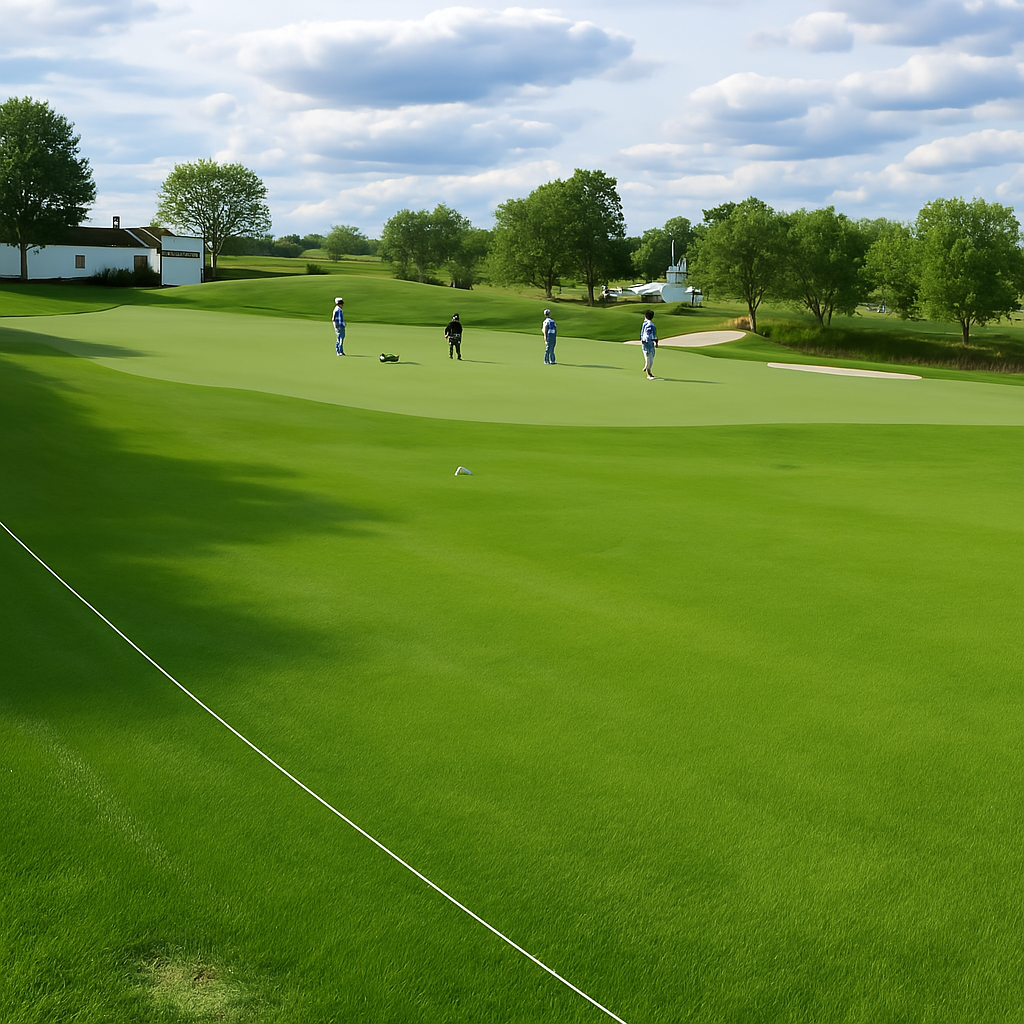
Beyond its breathtaking setting and challenging design, Liberty National has quickly established itself as a premier host for professional golf tournaments. It has welcomed multiple PGA Tour FedEx Cup Playoff events, including The Barclays and The Northern Trust, as well as the prestigious Presidents Cup in 2017. More recently, it has become the home of the LPGA Mizuho Americas Open. The club’s commitment to luxury extends beyond the course, offering a sleek, modern clubhouse, an on-site helipad, and private ferry service directly to and from Manhattan, solidifying its status as an exclusive and convenient golfing sanctuary for its discerning members.
1. Pine Valley Golf Club

Pine Valley Golf Club, nestled in aptly-named Pine Valley, New Jersey, is widely considered by many to be the greatest golf course in the world, a reputation it has held consistently for decades. Its creation was the singular obsession of amateur architect George Crump, who, starting in 1912, meticulously transformed over 180 acres of challenging sandy soil and scrubland into a golfing masterpiece. Crump’s vision was to create the ultimate test of golf, adhering to principles such as no two holes playing parallel, no two holes playing in the same direction consecutively, and each hole being entirely secluded from the others, fostering a sense of complete immersion and isolation.
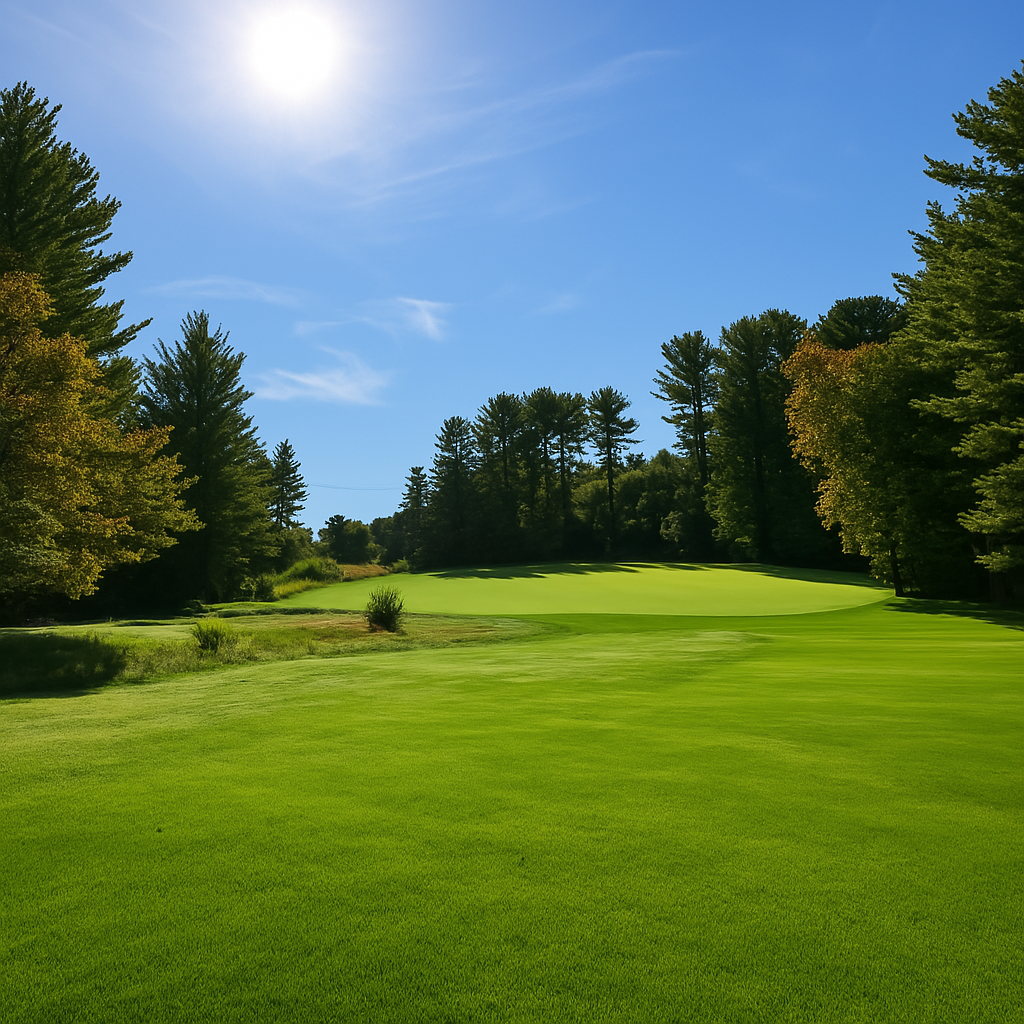
The course is renowned for its fearsome difficulty, demanding precision and strategic thought on every shot, yet it rewards good play and offers recovery options rather than simply lost balls. Iconic hazards like “Hell’s Half Acre” on the 7th hole and “The Devil’s Asshole” bunker on the 10th are legendary. Despite Crump’s untimely death before the course was fully completed, leading architects like Harry Colt and A.W. Tillinghast contributed to its finishing touches and subsequent refinements. Pine Valley’s unwavering commitment to its original, penal, and heroic design philosophy, combined with its highly exclusive, invitation-only membership, ensures its legendary status as a pilgrimage site for serious golfers worldwide, especially during its annual Crump Cup, which allows public access to walk the course.
These clubs represent the epitome of luxury and exclusivity in New Jersey country club scene. Each offers a unique blend of world-class golf, opulent amenities, and a commitment to privacy, catering to the elite who seek the finest in leisure and lifestyle.